Which vermouth to use in each cocktail
Red, dry or bianco, how much each classic takes, what to do without it, and why an open bottle ruins more cocktails than anything else.
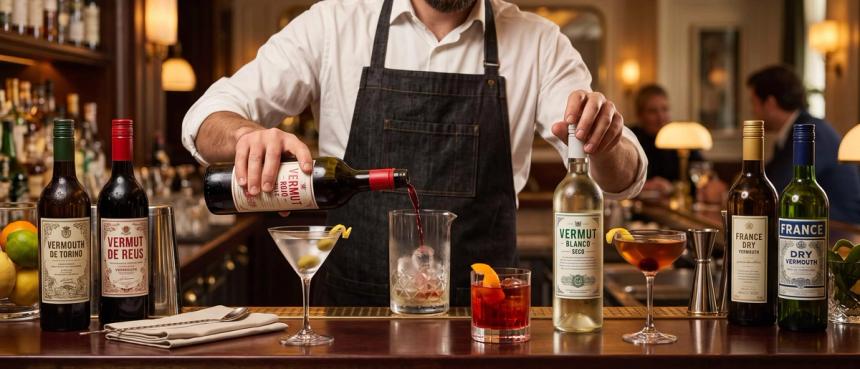
Vermouth is wine, not spirit. That one sentence explains nearly everything worth knowing about it: why it spoils, why it belongs in the fridge, and why the same cocktail can taste rounded one day and stale the next without you changing anything else.
The three that exist
A shop will offer dozens of brands, but classic cocktails need only three types.
- Red, sweet or rosso. The one for whisky drinks and the Negroni family. It brings sweetness, spice and a bitter floor. If you buy only one, buy this.
- Dry. Paler, sharper and far less sweet. It lives almost exclusively in the Dry Martini and its relatives.
- Bianco or blanc. Sweet like the red but floral and without the bitterness. It is not interchangeable with either of the others, whatever the colour suggests: bianco is not a dry vermouth.
How much each classic takes
The ratio matters more than the brand. These are the ones used by the cocktails in the recipe book:
Manhattan — 2 parts whiskey to 1 part red vermouth. The benchmark for the whole family.
Rob Roy — the same ratio, with Scotch in place of rye.
Negroni and Boulevardier — equal parts, 1:1:1. Here the vermouth does not accompany, it competes as an equal.
Dry Martini — 6 parts gin to 1 part dry vermouth, and some go as far as 10:1. It is the only one where the vermouth hides.
Hanky Panky — almost equal parts with the gin, plus a touch of Fernet.
Vermouth & Tonic — here it leads: 3 parts vermouth to 4 parts tonic.
The Old Fashioned has no vermouth in it
Worth stating plainly, because it is one of the most repeated confusions. An Old Fashioned is whiskey, sugar and bitters. Nothing else. Add vermouth and it stops being an Old Fashioned: it becomes, roughly, a Manhattan.
The mix-up comes from both being stirred whiskey drinks served in a rocks glass, and from the Manhattan sometimes being described as “an Old Fashioned with vermouth”. They are cousins, not the same drink.
If you have no vermouth
There is no exact substitute, because what it contributes is a blend of wine, sugar and botanicals no other bottle provides. But there are reasonable ways out:
- In a Manhattan, an oloroso sherry or a sweet fortified wine gets close. Not the same, but a good drink.
- In a Negroni, without vermouth there is no Negroni. Make something else.
- In a Dry Martini, a splash of very dry white wine will get you through once. Once.
What actually ruins home cocktails
Here is the part almost nobody knows, and it accounts for more disappointing Manhattans than anything else: open vermouth oxidises. It is wine, and a bottle left open on the drinks shelf at room temperature is dead within a month.
Three rules and the problem disappears:
- Once opened, into the fridge. No exceptions.
- Throw it out after a month, six weeks at the outside. If it tastes nutty or of stale caramel, you are already late.
- Buy small bottles if you drink little vermouth. It works out cheaper than pouring half a large one away every month.
If a vermouth cocktail comes out harsh or with a stale aftertaste, check the bottle before you change the recipe. Nine times out of ten that is it.