Ice: the ingredient nobody measures
It is the only ingredient that keeps working after you serve. Its size, its temperature and even its clarity decide whether the drink holds for twenty minutes or waters down in five.
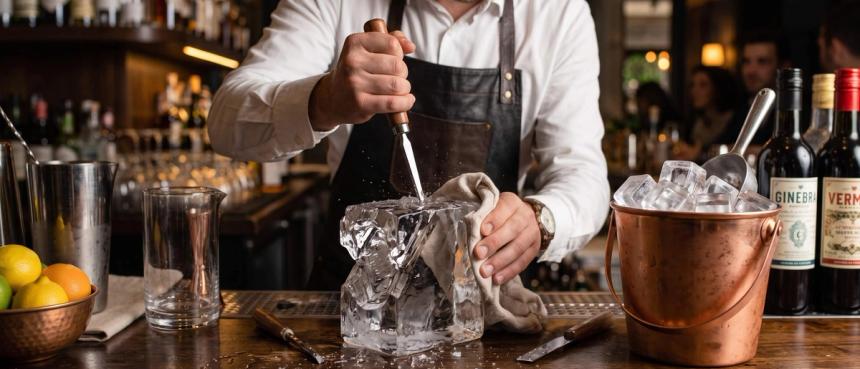
In a cocktail recipe, ice shows up as "ice, as needed", if it shows up at all. Yet it contributes twenty to twenty-five percent of the final volume as water, more than plenty of ingredients we measure to the millilitre.
More ice chills more and dilutes less
It is the most counterintuitive thing in mixology, and it is why almost every home bar gets it wrong. Putting in two cubes instead of filling the glass seems like it should dilute less. The opposite happens.
With little ice, each cube has to absorb all the heat in the liquid, so it melts completely and fast. With the glass full, that heat is shared among many cubes, none melts entirely, the temperature drops sooner and less water ends up in the drink. Always fill the glass.
Each size has its purpose
A large cube, five centimetres or more, has little surface area relative to its volume, so it melts slowly. It is the one for drinks you sip slowly and where the spirit leads: Old Fashioned, whisky neat, Negroni.
Crushed ice is the opposite: maximum surface area, instant chill and fast dilution. That is not a flaw, it is the intended effect in juleps, swizzles and tiki drinks, where rapid dilution is part of the profile.
The standard tray cube belongs in the shaker. Not so large that it fails to chill while shaking, not so small that it shatters into slush.
Clear ice at home
Freezer ice comes out white because the water freezes from every direction at once, trapping air and minerals in the centre. That cloudy core also melts faster and unevenly.
The home solution is directional freezing: put a small cooler, lid off, filled with water into the freezer. Insulated on the sides, the water freezes top-down and pushes the impurities to the bottom. After twenty-four hours you take out the block, discard the cloudy lower portion and cut the rest. It comes out as clear as bar ice.
Ice absorbs odours
A cube that has spent two weeks in the freezer next to leftovers tastes of those leftovers, and that flavour ends up in the drink. Keep ice in a sealed bag and replace it weekly. It is the most common explanation for a homemade cocktail tasting off for no obvious reason.