
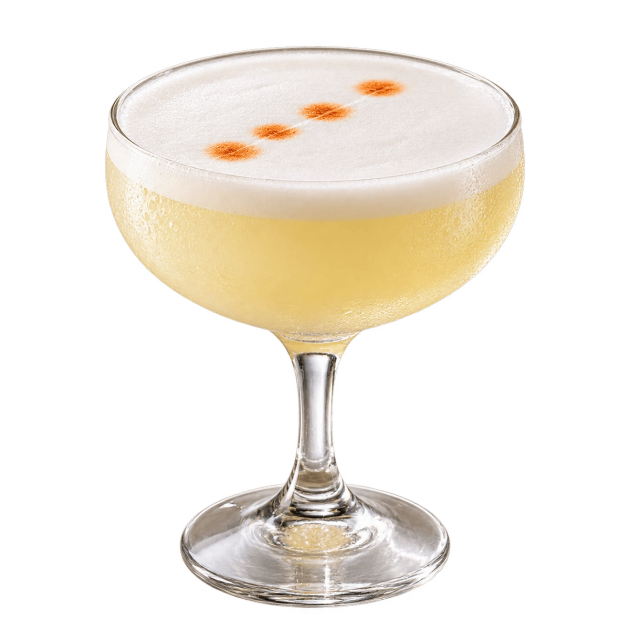
Pisco Sour
Prep time:
Pisco, lime, sugar syrup and egg white, with a few drops of Angostura on the foam. It was born in Lima in the 1920s, at the bar of the American Victor Morris, and it is Peru’s flagship cocktail, with a national day of its own: the first Saturday of February.
Ingredients
- 2 oz of pisco
- 1 oz of fresh lemon juice
- 1 oz of sugar syrup
- 1 egg white
- 3-4 drops of Angostura bitters
Preparation
- In a cocktail shaker without ice, add the pisco, lemon, syrup and egg white.
- Do a dry shake (without ice) for 15 seconds to emulsify the egg white.
- Add ice and shake vigorously for another 15 seconds.
- Double strain into a coupe glass or lowball glass.
- Add 3-4 drops of bitters on top of the foam.
Bartender’s notes
What is the ratio?
The reference ratio in Peru is 3-1-1: three measures of pisco, one of lime and one of sugar syrup, plus the egg white. It is the driest and the one that puts the pisco up front. This recipe uses 2-1-1, which is another common formula. It comes out a little sharper and sweeter, with less alcohol per glass, and it is more forgiving if the pisco is very aromatic or the lime is not Peruvian. To work up to the classic, start with this one and raise the pisco by half a measure at a time.
Which pisco, and which lime?
Peruvian pisco, and quebranta if you can: it is the non-aromatic grape most used for Pisco Sour, because it gives body without burying the lime. Aromatic ones such as Italia or Torontel also work, but they perfume the drink so much that it changes character. Chilean pisco is legally a different product — it may be diluted with water and aged in wood, and Peruvian pisco may not — and it makes a different drink. The lime is the other half. What Peru calls “limón” is the limón sutil: small, green and very sour, sold outside Peru as key lime. A yellow lemon has a different aroma and acidity, and with it the Pisco Sour comes out different. If you cannot find key limes, an ordinary lime is the closest match.
Can you make it without egg?
Yes, and it makes a good drink, but it loses what makes it recognisable: the foam and that silky texture. The egg white adds no flavour; it adds body and softens the sharpness of the lime. If raw egg is what stops you, there are two ways out. Pasteurised egg white from a carton foams well and carries no risk. Aquafaba — the cooking liquid from chickpeas — is the usual vegan substitute: it foams with the same double shake, though the foam does not last as long. With neither, shake it with ice only and add the bitters into the drink rather than on top, because without foam they sink.
What can you use instead of pisco?
There is no exact substitute, because Peruvian pisco is a grape brandy that never sees wood, and that is where its aroma comes from. The closest thing is another young grape spirit: a Bolivian singani or an unaged grappa. With either you get a very similar sour. With gin, whiskey or rum you can make a sour too — the structure is the same — but it is no longer a Pisco Sour: it is a Gin Sour, a Whisky Sour or a Daiquiri with egg white. They are good, but they are different drinks.
Related recipes
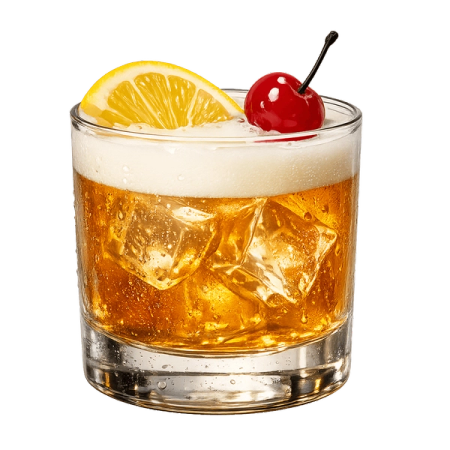
Whiskey Sour
The sour family at its most recognisable: spirit, citrus and sugar, crowned by a silky foam that changes the texture entirely.
View recipe →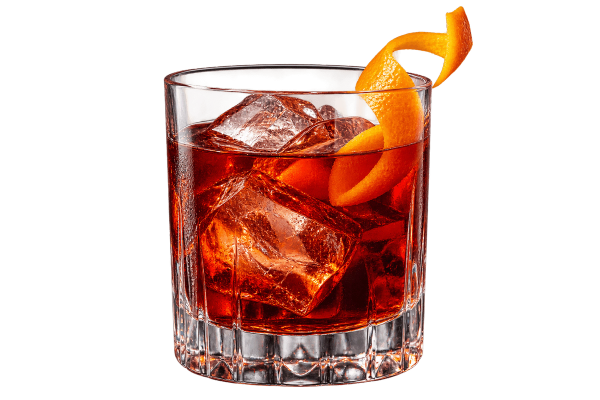
Boulevardier
Bourbon, Campari and sweet vermouth, stirred and finished with orange peel. It is the Negroni with whiskey instead of gin, and the change goes beyond the name: it comes out rounder, sweeter and longer on the palate, more an after-dinner drink than an aperitivo.
View recipe →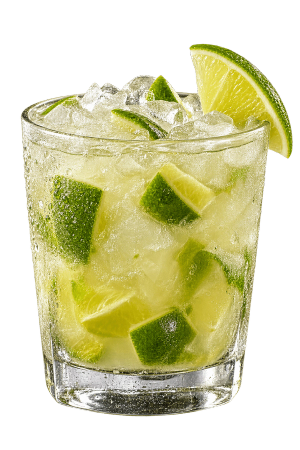
Caipirinha
Cachaça, lime and sugar, muddled in the glass and topped with crushed ice. It takes cachaça rather than rum because cachaça is something else: it is distilled from fresh-pressed cane juice, while almost all rum is made from molasses, and that is where its fresh, grassy edge comes from.
View recipe →