The jigger: measure like a pro
Measuring is not for beginners: it is what the best bars in the world do. Ten millilitres too much lime is not a ten per cent error, it is a different drink.
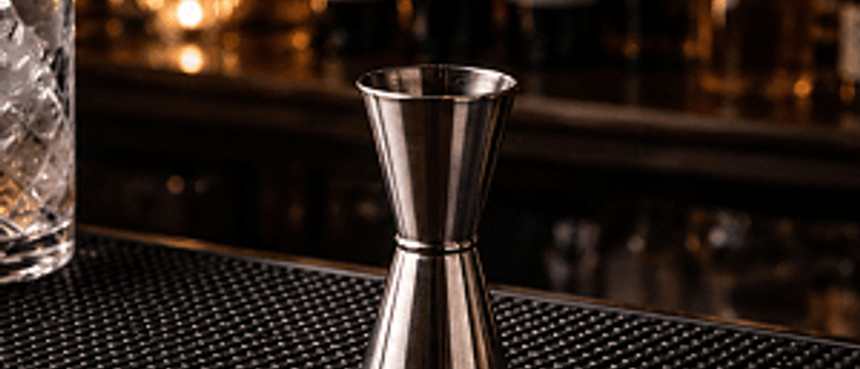
There is a widespread idea that measuring is for beginners and that a bartender with real craft pours by eye. It is exactly the other way round. In the bars that show up on the world’s best lists, absolutely everything is measured — because a cocktail is not a sum of ingredients, it is a ratio.
Why ten millilitres change everything
A classic sour is built on a 2:1:1 relationship — two parts spirit, one part sweet, one part sour. In a Daiquiri that is 60 ml of rum, 30 of lime and 22.5 of syrup. Overshoot the lime by ten millilitres and you have not made a ten per cent error: you have shifted the axis the whole drink rests on, and turned it aggressive.
Put in perspective, that slip is an eleven per cent deviation on a ninety millilitre drink. Nobody would accept that margin in baking, yet with alcohol it passes because the error hides. It does not hide: you taste it on the second sip, when the drink starts to tire you.
The confusion over sizes
The classic American jigger pairs 1.5 ounces in the large cone with 1 ounce in the small one, the measure known as a pony. Across Europe and much of Latin America the work is done in millilitres, with 25/50 or 30/60 pairs depending on the country. An ounce is 29.57 ml, so rounding to 30 is an accepted habit with no consequence at bar scale.
The Japanese model is taller and narrower, with the intermediate measures marked inside: 15, 22.5, 30 and 45. That slimness is not decorative. With a smaller diameter, the same error in height means less volume, which is why it performs best in accuracy tests and why it dominates professional bars.
How to actually use it
Fill it to the brim, not a finger below. The jigger is calibrated to the rim: leave it two millimetres short and you are dropping close to ten per cent of the ingredient. It feels nerve-racking at first because of the wobble; that passes within a week.
Hold it between your index and middle fingers, not in your fist. That way you can flip from one cone to the other without letting go and without setting it down, which is what makes measuring look slow. And always pour over the shaker, never beside it: whatever spills ends up in the drink instead of on the cloth.
The mistake almost nobody notices
Measuring the spirit and then adding the lime by eye. It is the most common error and the most expensive one, because the balance of a sour does not live in the rum: it lives in the relationship between acid and sugar. The spirit sets the character, but those other two decide whether the drink works.
The same goes for syrup, which gets treated carelessly because it is cheap. Five millilitres too many in a small coupe is the difference between rounded and cloying.
Which one to buy
One with the graduations marked inside. It costs barely more than a plain one and saves you keeping three different jiggers in the drawer to reach the intermediate measures. It is by some distance the cheapest tool behind the bar, and the one that most improves what you serve.