
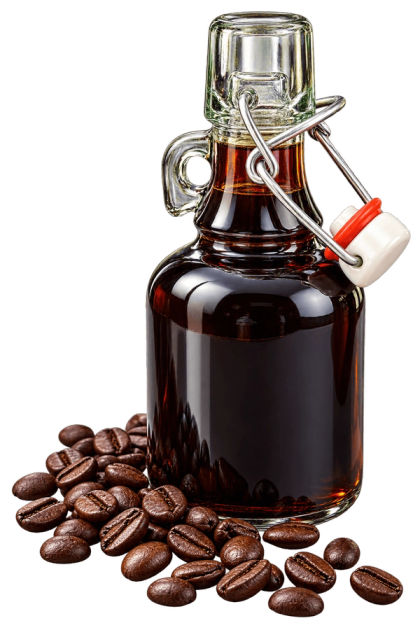
Galician coffee liqueur
The one from the Galician table, from the queimada and from after the cocido. It is made with orujo — grape pomace spirit, not rum — and that is the whole difference: orujo brings a grape backbone no other spirit gives it.
Ingredients
- 1 litre of orujo (grape pomace spirit)
- 150 g whole coffee beans, medium or dark roast
- 250 g sugar
- 150 ml water
- The peel of one lemon, no white pith
- 1 cinnamon stick
Preparation
- Crack the beans in a mortar with a couple of sharp knocks, stopping well short of grinding them. The maceration is long and the coffee has weeks to give everything up, so there is no need to force it: ground fine, all it adds is a sediment that clouds the liqueur past any filter.
- Put the coffee, lemon peel and cinnamon in a large jar and cover it all with the orujo. Seal it and leave it somewhere cool and dark.
- Steep for one to two weeks, shaking the jar every two or three days. Some stretch it to a month looking for something darker and deeper; past that it does not improve, it just turns bitter.
- Make the syrup with the sugar and water, boiling it for five minutes, and let it cool COMPLETELY. Poured warm over the infusion, it clouds the liqueur permanently.
- Strain through a fine sieve and then run the liqueur through a paper filter. It goes drop by drop and cannot be hurried: squeezing the filter pushes the sediment through to the other side and undoes the work. Mix with the cold syrup and bottle.
- Let it rest. It is drinkable after a week, but at three months it is another thing entirely: the alcohol integrates and the coffee stops going its own way.
Bartender’s notes
Can you make it without orujo?
You can make a coffee liqueur, yes, but not this one. Orujo is a grape pomace spirit and brings a dry, faintly rough backbone that holds the coffee up from underneath; with rum the result is sweeter and rounder, with vodka cleaner and flatter. If you cannot find orujo, the closest substitute is any other grape spirit — a young grappa, a Portuguese bagaceira. With rum or vodka you are making a different recipe, which is also good, but it is a different one.
When is it drunk?
After a meal and cold, in a small glass. In Galicia it is the usual close to a long lunch, and it always turns up in the same scenes: the conversation that stretches on, the coffee already finished and the bottle appearing without anyone asking for it. It is also the base of the queimada, though for that you use plain white aguardiente rather than this.
Is “orujo de café” the same thing as licor café?
They are the same drink under two names, and the second one is the right one. Orujo is the spirit: a pomace brandy distilled from the solids left after the grapes are pressed for wine. Licor café is what you get by macerating coffee in that orujo and sweetening it. Saying “orujo de café” is like saying “grape wine” when you mean a red: everyone understands it and half the world says it, but the product is called licor café. With capitals when it is the one covered by its own geographical indication, Licor Café de Galicia, which sits alongside orujo and herb spirit under the same regulatory council.
Why is it called “licor café blanco”?
For the spirit it starts from, not for the colour of what comes out. Orujo is a clear distillate — white spirit, the same one that burns in the queimada — whereas industrial coffee liqueurs are built on dark rum or on caramelised alcohol. That is why this one ends up amber and translucent instead of the opaque brown of the supermarket bottle. And if yours comes out cloudy, that is not the colour: that is coffee ground too fine, or syrup poured in before it was completely cold.
Related recipes
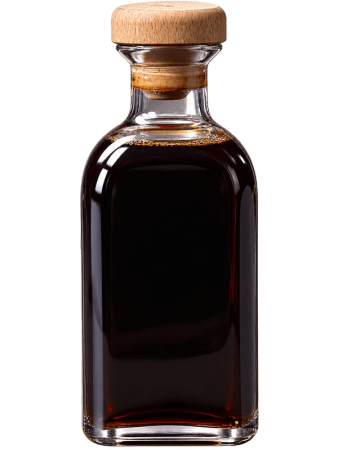
Homemade coffee liqueur
The homemade version beats the original at the thing that matters most: it tastes of coffee, not caramel. It is cold-infused from whole beans and ready in three days.
View recipe →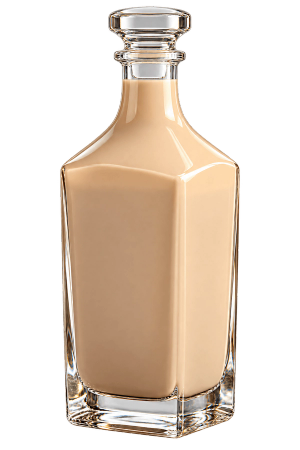
Homemade Irish cream
Irish whiskey, cream, condensed milk, a little coffee and cocoa, whisked together in moments. It is the homemade version of Baileys-style Irish cream, and it differs from the other homemade liqueurs here in one important way: there is no steeping and no waiting, it takes ten minutes and you can drink it the same day.
View recipe →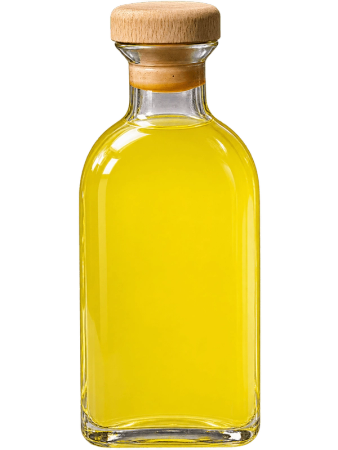
Homemade limoncello
The homemade liqueur, and one of the few that turns out better at home than bought. Three ingredients and fifteen minutes of work; time does the rest.
View recipe →