Sustainable mixology: the 2026 trend
A bar squeezes hundreds of limes a night and throws away the most aromatic part of the fruit. Sustainable mixology was born from noticing that, and today it is the reason some drinks taste better than they did ten years ago.
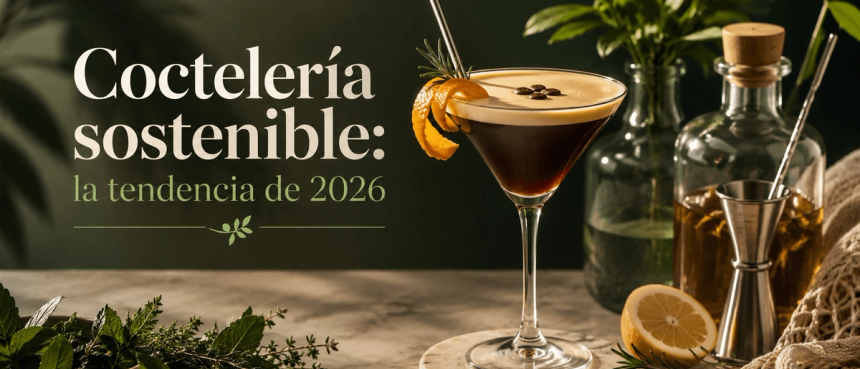
Sustainable mixology has gone from niche label to the standard way of working in many of the world's best bars. What is interesting is that it did not arrive through environmental pressure, but through a far more uncomfortable observation: what was being thrown away tasted better than much of what was being served.
The problem starts in the bin
Do the maths for any given night. A busy bar squeezes between two and three hundred limes. From each one it uses about twenty millilitres of juice and discards the entire peel.
The catch is that the aroma of a citrus fruit is not in the juice: it is in the essential oils of the peel. That is why an orange twist transforms an entire Old Fashioned while a few drops of juice would do nothing. Put another way, bars spent a century keeping the acidic water and binning the perfume.
Oleo saccharum: sugar that steals oils
The technique that solved it is three hundred years old and has a Latin name. Citrus peels are covered in sugar and left to sit. The sugar draws the oils out of the skin by osmosis until it dissolves into them, and after a day what was peel and sugar has become a dense, perfumed syrup.
It requires no equipment and no experience. After squeezing tonight's limes, keep the peels, cover them in sugar in a jar and leave it in the fridge until tomorrow. When you strain it you will have a citrus syrup with an intensity no shop-bought product comes close to matching. And you made it out of rubbish.
The citrus that yields eight times more
The next turn of the screw is called super juice, and it is where sustainability stops being a gesture and becomes economics. You start from the peel, add water and a blend of citric and malic acid that reproduces the fruit's acid profile. The result is a juice with the same flavour and the same acidity, but several times the yield per piece of fruit.
Bar programmes that have adopted this kind of acid-adjusted citrus made from peels report margin increases of up to twenty percent. That is the real reason the technique spread so quickly: you do not win over the accountant by talking about the planet, you win them over by showing them the fruit invoice.
And everything else works too
Once you change how you look at it, the rest follows. Herb stems, thrown out by habit, hold more essential oil than the leaves and are perfect steeped in syrups or bitters. Mango stones and apple cores become syrup bases and shrubs. Fruit too ripe to garnish with is exactly the fruit that works best in a cordial.
Some bars have closed the loop entirely: the solids left over from the oleo saccharum are composted, and that compost grows the herbs that will end up garnishing next season's drinks.
The line between sustainable and posturing
It is worth saying, because the label is starting to be used far too freely: a bar that advertises its zero-waste commitment while flying in fruit and serving every drink with three disposable garnishes is not being sustainable, it is doing marketing.
The honest measure is simple and cannot be dressed up: what goes out the back door at the end of the night. Everything else — the copy on the menu, the certificate on the wall — is decoration.
Start tonight
You do not need to rethink your bar. The next time you make something with lime, do not bin the peels: cover them in sugar and put them away. Tomorrow you will have an ingredient no shop sells, and you will have understood, the practical way, what all of this is about.