Why the shape of the glass changes the drink
It is not about looks. The mouth, the stem and the thickness of the glass change the aroma reaching your nose, the temperature five minutes in, and even how strong the drink tastes.
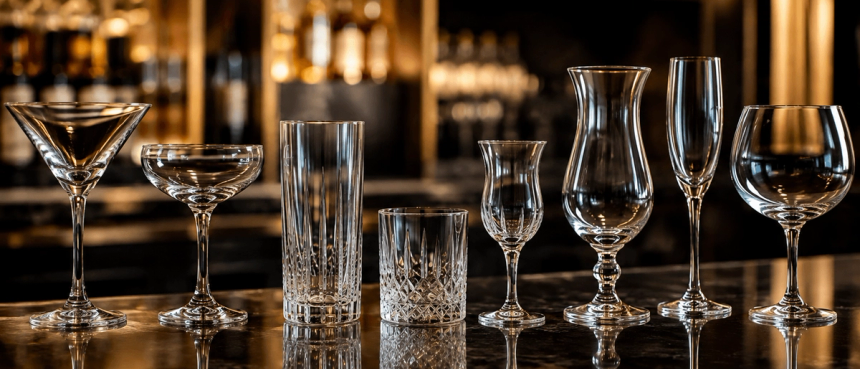
Serving a Martini in a tumbler is not just a lapse of style: it is a different drink. What we call taste is mostly smell, and the glass decides how much aroma reaches your nose and how fast what is inside warms up.
The mouth concentrates or disperses
A narrow mouth, like that of a Nick & Nora, funnels the volatile compounds upwards and concentrates them right where your nose goes. That is why it works so well for stirred, aromatic drinks, where the nuance lives in the vermouth or the bitters.
A wide mouth, like a balloon glass, does the opposite: it gives surface area for the botanicals to breathe and expand. That is why a gin and tonic is served in a balloon glass rather than a straight tumbler; gin needs that space to open up.
The stem is not decorative
Your hand is at thirty-seven degrees. A drink served up sits at around four. If you hold the bowl, you are transferring heat straight into the liquid, and within five minutes you will have raised it by several degrees.
The stem exists to prevent that. It is also why drinks served over ice come in stemless glasses: there the ice does the work and the heat from your hand is irrelevant.
The thickness of the rim
A thin rim delivers the liquid straight to your palate, with no glass in the way. A thick rim forces you to tilt more and spreads the liquid differently. For drinks served up, the thinner the better.
The exception is anything with ice that will take knocks: there a heavy-based tumbler survives daily use, and the weight gives a solidity that suits an Old Fashioned.