Drinking less, drinking better
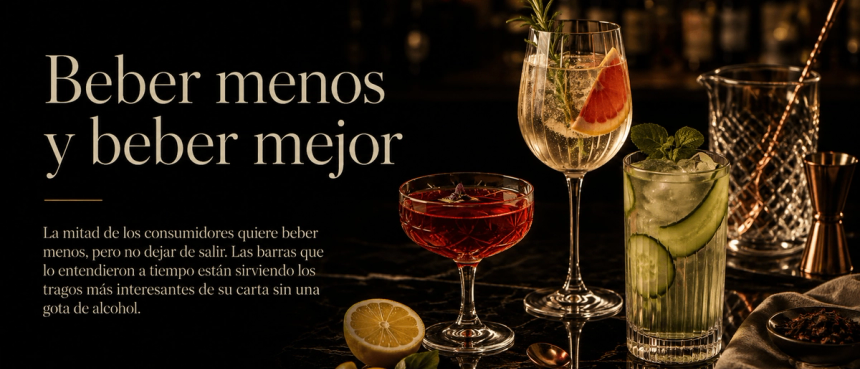
Half of consumers say they want to drink less, but they are not staying home. They are ordering something else. And the bars that understood this early are serving the most interesting drinks on their menu with no alcohol at all.
For years, ordering something alcohol-free in a decent bar meant settling. They handed you a soda with a slice of lemon, charged you almost as much as a cocktail and left you feeling like a guest at your own table. That era is over, and not because of moral pressure: it is over because the numbers stopped supporting anyone who ignored them.
The figure that changed everything
In 2023, around a quarter of American consumers said they intended to drink less the following year. By 2025 that share had reached nearly half. This is not a passing January fad: it is a sustained curve that has been climbing for years.
The market responded in kind. NielsenIQ put the non-alcoholic category at 925 million dollars with 22% year-on-year growth, and stopped describing it as an alternative to call it what it really is: a lifestyle choice.
But the most revealing figure is another one, and it is the one almost nobody quotes: 92% of people who buy non-alcoholic drinks also buy alcoholic ones. This is not a bloc of teetotallers. This is the same person who orders a Negroni on Friday and, on Tuesday after the gym, wants something just as good that will not take them anywhere.
Why most mocktails are still bad
The underlying mistake is treating an alcohol-free drink as a subtraction. You take the original recipe, remove the spirit and fill the gap with juice. The result is predictable: expensive lemonade.
Alcohol does not just provide strength. It provides body, viscosity, a warming sensation in the throat and, above all, the bitterness and astringency that balance sweetness. Take it away without replacing any of that and the drink collapses under its own weight: it lands flat, disappears in three sips and leaves nothing behind.
The bars getting it right work exactly there. They rebuild body with teas and cold infusions, which contribute tannins; with verjus, the juice of unripe grapes, which brings acidity without the sugar of citrus; with brine and salt, which wake up the palate; and with alcohol-free bitters, which restore the bitter edge that makes a drink feel grown-up.
What this means if you make drinks at home
The good news is that none of those techniques requires special equipment. Cold green tea, a homemade ginger syrup and a few drops of alcohol-free bitters turn a decent mocktail into one that holds its own.
And there is a shift in mindset that helps more than any ingredient: stop thinking about "the alcohol-free version of" and start building the drink from scratch. A good alcohol-free drink is not a Mojito with something missing. It is a beverage with its own logic, served in proper glassware, over decent ice, with the same attention to detail as anything else you pour.
Because in the end that is what that 92% is asking for: not to have the alcohol taken away, but to not have the drink taken away with it.